



“My wisdom teeth haven’t come in properly, but they don’t bother me. Why do I need to have them removed?” This is a question we hear very often in our clinic. And it’s a perfectly reasonable one: if there is no pain, swelling, or obvious discomfort, it may seem like there is no problem at all. However, when it comes to wisdom teeth, the issue often does not begin with pain. Instead, it can stem from an unfavourable position, difficulty maintaining proper hygiene, and silent damage to neighbouring teeth.
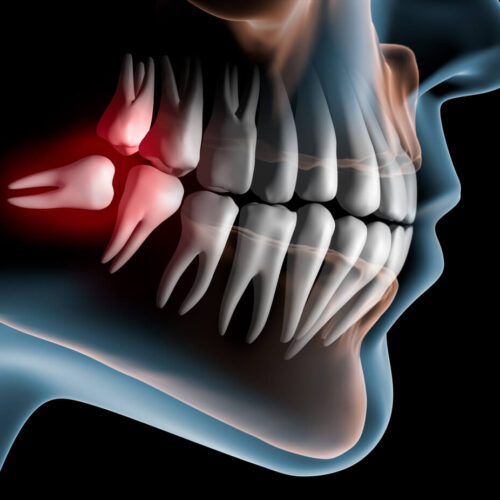
Wisdom teeth, also known as third molars, usually emerge between the late teenage years and early adulthood. In some people, they erupt correctly, have enough space, fit properly into the bite, and can be cleaned effectively. In these cases, removal is not always necessary. However, when they grow at an angle, remain partially covered by gum tissue, lack sufficient space, or serve no real function in the bite, they should be assessed very carefully.

Extraction Is Often Easier in Younger Patients
One of the reasons for considering wisdom tooth removal at a younger age is that the jawbone is usually less dense, the roots may be less fully developed, and recovery tends to be quicker than in older adults. According to Mayo Clinic, in many cases, removing wisdom teeth in young adults can be safer, simpler, and associated with a more favourable recovery than waiting until later in life.
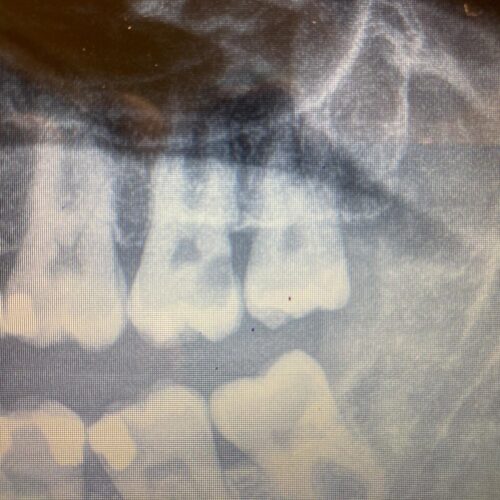
This does not mean that wisdom teeth should be removed routinely. Rather, they should be assessed at the right time. A simple X-ray allows the dentist to evaluate their position, their relationship with the second molar, and whether there is a risk of future problems.
“The first reason, and perhaps the simplest—though not necessarily the most important—is that the bone is generally softer in younger patients, making wisdom teeth easier to remove and resulting in less postoperative discomfort.”
Dr. Andrés Llobell
When Wisdom Teeth Interfere with Orthodontic Treatment and Bite Alignment
Another important consideration is the relationship between wisdom teeth, orthodontic treatment, and occlusion.
If a wisdom tooth does not have enough space, erupts at an angle, or pushes against the second molar, it can affect the stability of the bite or complicate orthodontic treatment planning. The American Dental Association notes that a dentist may recommend the removal of wisdom teeth as part of treatment with braces or other dental procedures when deemed necessary.
For this reason, we always assess the position of wisdom teeth in young patients who are about to begin orthodontic treatment or who have recently completed it.
“The second reason, and a particularly important one, is that wisdom teeth can interfere with orthodontic treatment and with the overall alignment of your bite.”
Dr. Andrés Llobell
The Biggest Problem: Difficult-to-Maintain Hygiene
The reason we encounter most often in clinical practice, after years of experience, is oral hygiene.
A wisdom tooth that has not erupted properly, remains partially covered by gum tissue, or does not fit correctly with the opposing tooth can become an area where food debris and bacterial biofilm accumulate.
A patient may brush the rest of their mouth thoroughly but still be unable to clean this area effectively. This is where problems begin: gum inflammation, bad breath, recurring discomfort, a persistent feeling that the mouth is not clean, or localised infections. Both the NHS and the American Dental Association note that partially erupted or poorly positioned wisdom teeth can trap food and bacteria, increasing the risk of tooth decay, gum disease, and infections.
“The third reason, based on clinical experience, is that a wisdom tooth that has not erupted in the correct position and does not occlude properly becomes a site where food debris and bacterial biofilm accumulate.
These teeth can contribute to halitosis, act as reservoirs for anaerobic bacteria, and increase the likelihood of recurrent throat-related problems. But above all—and I cannot stress this enough—I frequently see patients who develop extensive decay in their second molars simply because they cannot maintain proper hygiene in that area.
In many cases, the wisdom tooth itself may be free of decay, while food particles become trapped beneath the enamel margin of the adjacent second molar. This can lead to severe cavities that are often disproportionate to the patient’s overall oral health and, unfortunately, may leave the second molar impossible to restore.”
Dr. Andrés Llobell
The Most Serious Damage Often Affects the Second Molar
In many cases, the real problem is not the wisdom tooth itself, but the tooth directly in front of it.
This is a very important point.
When a wisdom tooth is tilted against the second molar, it creates an area that is extremely difficult to clean, where food debris can accumulate below the enamel margin. Even patients with otherwise excellent oral hygiene are often unable to clean this area effectively. Over time, a deep cavity may develop in the second molar.
What makes this particularly frustrating is that the wisdom tooth itself often shows little or no decay, while the second molar—a functional and important tooth—can suffer significant damage. In some cases, the tooth can be restored. In others, the decay progresses so deeply that the long-term prognosis for the second molar becomes poor.
This is why we emphasise that it is not always advisable to wait for symptoms to appear. By the time pain develops, the problem has often been progressing unnoticed for quite some time.
So, Should All Wisdom Teeth Be Removed?
No. If a wisdom tooth has fully erupted, is properly aligned, bites correctly, does not cause inflammation, and can be cleaned effectively every day, it can often be kept and monitored through regular dental check-ups.
However, if it is poorly positioned, partially covered by gum tissue, prone to trapping food, difficult to clean, affecting the second molar, or interfering with orthodontic treatment, then it is usually wise to consider extraction.
The goal is not to remove wisdom teeth unnecessarily. Rather, it is to prevent a future problem that, in many cases, is both predictable and avoidable.
“Should I have them removed? If they are not properly aligned, my answer is generally yes. You will reduce the risk of future problems that are often difficult to avoid, improve your ability to keep the area clean, and enjoy a healthier, fresher-feeling mouth.”
Dr. Andrés Llobell
Prevention Is Better Than Late Treatment
Removing a wisdom tooth at the right time can help prevent infections, recurrent inflammation, difficult-to-treat cavities, and damage to the adjacent second molars.
At Llobell Clinic, we assess each case individually through a clinical examination and radiographic evaluation, explaining whether extraction, monitoring, or simply regular follow-up is the most appropriate option.
In dentistry, prevention often saves time, discomfort, and the need for more complex treatments in the future.
If you have any concerns about your wisdom teeth, feel free to contact us. Even when they are not causing pain, they may still be telling us a great deal about your oral health.
“Don’t wait until problems arise. Prevention in dentistry saves both time and money. If you have any questions or concerns, we’ll be happy to help.”
Dr. Andrés Llobell